We can help you reduce emissions
Eminox Group of Companies delivers global solutions, from our local European, Indian, North American and UK facilities
Connect with us


Emission control challenges are real, and shared
Whether you are integrating propulsion systems into a new-build vessel or managing a fleet of working craft across regulated waterways, Stage V compliance is possible through the integration of exhaust aftertreatment systems, and not through engine selection alone. An engineered approach to managing particulate matter (PM) and nitrogen oxides (NOx) reduction, and system integration is required.
Under EU Regulation 2016/1628, Stage V introduced dedicated emission categories for inland waterway propulsion (IWP) and auxiliary (IWA) engines above 19kW. Compared to the preceding Stage III A vessel standards, the limits for NOx and PM are dramatically more stringent and particle number (PN) limits have been added for higher-power categories.
Global emissions standards can be viewed, in greater detail, by clicking here.
For OEMs, naval architects, boat builders and shipyard engineers to achieve compliance, performance and programme certainty the right engineering decisions should be made early and with the expertise of exhaust aftertreatment system specialists. Factors the Eminox Group engineering team will consider for each project are:

Space and weight constraints
Inland waterway craft, from river barges and push-tugs to passenger ferries and dredgers, operate within tight structural envelopes. Integrating exhaust aftertreatment systems without affecting stability, cargo capacity or passenger space demands careful system architecture from the earliest design stage.

Variable duty cycles
Inland operations involve frequent load transitions: locks, berths, variable currents and stop-start schedules all demand aftertreatment systems that maintain catalytic efficiency across a wide range of exhaust temperatures and engine loads, not just at type-approval conditions.

Engine marinisation and integration
Engine marinisers adapting industrial or on-road engines for inland waterway propulsion face the challenge of matching aftertreatment to non-standard exhaust configurations, reductant storage, and the corrosive marine environment, all within a certifiable, type-approvable package.
Type approval and certification
Demonstrating compliance with propulsion and auxiliary emission categories requires validated test data, recognised approval routes, and supply chain documentation that satisfies both EU type-approval authorities and, for UK-operating vessels, the relevant domestic regime.
Retrofit and repower complexity
Boat builders and operators bringing existing or low volume new-build vessels into compliance face compounding challenges: legacy engine interfaces, limited installation access, operational downtime, and the need to demonstrate equivalent emission performance to the standards applicable to new engines.
Supply chain coherence
Sourcing DOC+DPF and SCR, urea dosing and electronic control from separate suppliers increases integration risk, complicates type approval, and frequently produces system performance that is less than the sum of its parts.
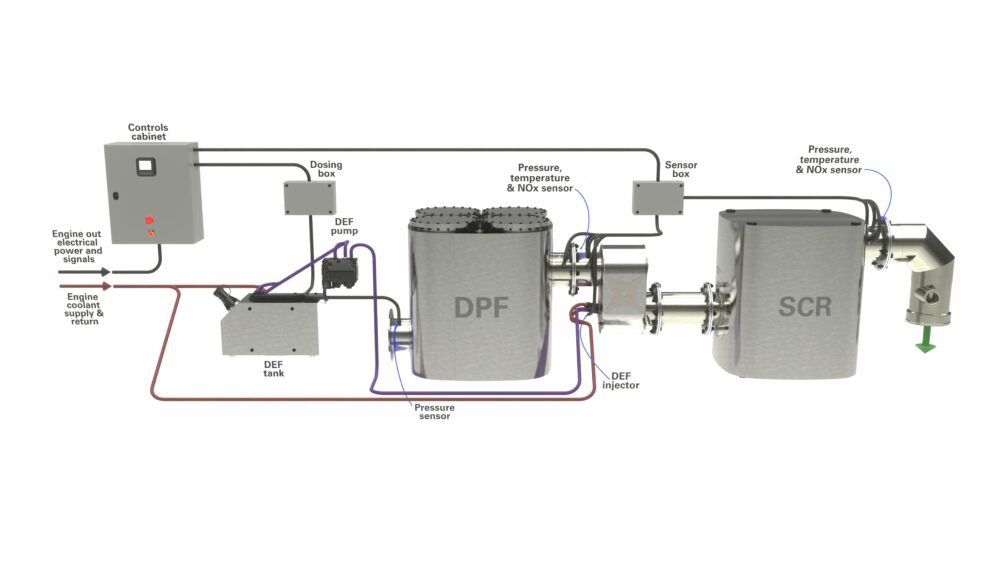
The Stage V Emission Control by Eminox scalable, exhaust aftertreatment systems for Inland waterway propulsion and auxiliary engines span a wide power range and can be applied to small harbour workboats through to large push-convoys and dredging vessels.
Our exhaust aftertreatment platform products are developed for a broad range of vessels and are designed with a diesel particulate filter (DPF), urea dosing system (UDS) and selective catalytic reduction (SCR) catalyst. They can reduce particulate matter (PM), nitrogen oxides (NOx, NO2), carbon monoxide (CO) and hydrocarbons (HC) by up to 99%, even at low operating temperatures and offer:
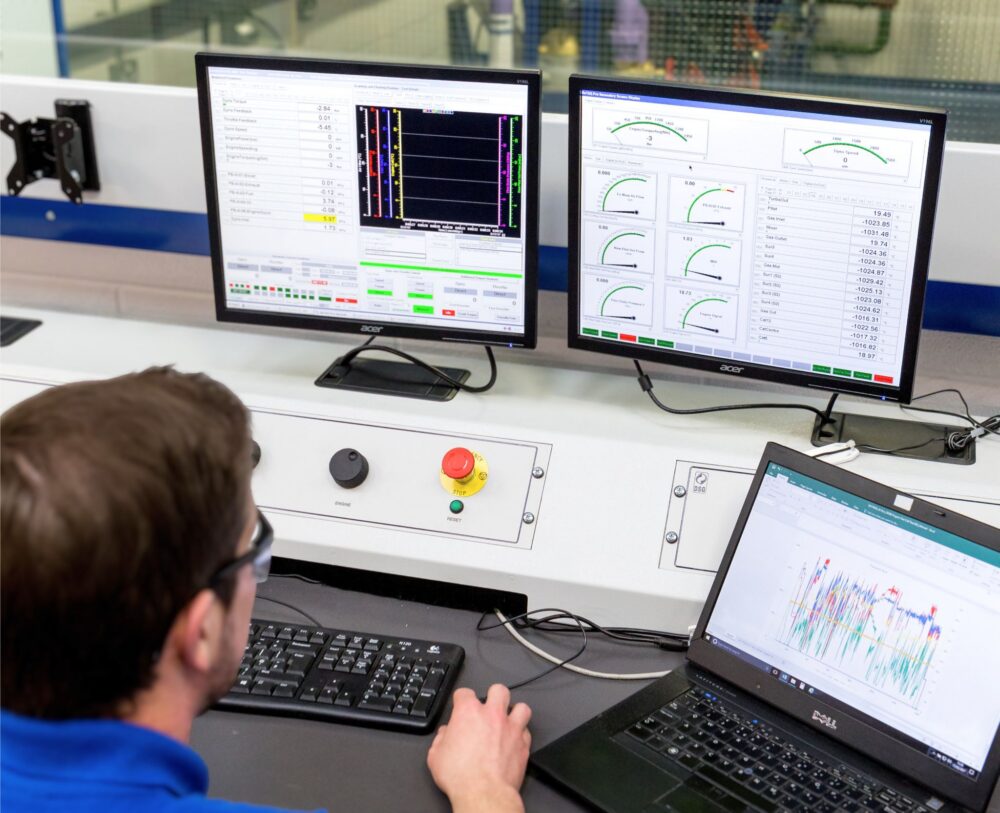
Our engineers work alongside project teams from early design through to in-service support and share the technical and regulatory load at every step of the process.
Early-stage consultation
System architecture review with engine marinisers, naval architects and boat builders, before installation space is committed
Performance modelling
Simulation across test cycles to confirm emission compliance at type-approval conditions and across real-world duty cycles
Integration and installation
Customised packaging, exhaust routing and urea storage solutions for new-build and retrofit projects, with on-site commissioning support also available
Ongoing lifecycle support
Diesel particulate filter (DPF) cleaning, remanufacturing and repair and maintenance contracts to maintain compliance across the operational life of the vessel


Eminox Group of Companies delivers global solutions, from our local European, Indian, North American and UK facilities
Connect with us
We design and engineer emission reduction technologies. Our technical expertise and strategic product development enables our customers to achieve their sustainability goals and operational ambitions. We are committed to delivering affordable solutions.
Email: [email protected]
Phone: +44 (0)1427 810088
Eminox Limited, Miller Road, Corringham Road, Industrial Estate, Gainsborough, United Kingdom, DN21 1QB
Eminox Group of Companies




Copyright 2026 Eminox Registered in the UK Registration NO. 01349209 CRT and SCRT are registered trademarks of Johnson Matthey plc.